MARIA SHORT
In the early 18th Century the Short family were scientific instrument makers in the south side of Edinburgh. In 1776 their son Thomas leased land on Calton Hill and built a ‘Gothic House’ to house his optical instruments and very fine telescopes, charging admission to see them. He died in 1788.
In 1827, Maria Theresa Short returned to Edinburgh from the West Indies claiming to be Thomas’s daughter. She wished to claim his ‘Great Telescope’ for her inheritance. There was strong competition from other parties, but Maria received the telescope and set up a ‘Popular Observatory’ in 1835, housed in a wooden and stone building next to the National Monument on Calton Hill. She exhibited many scientific instruments and kept her Observatory open till 9pm each evening.
In a leaflet from this period, solar microscopes and achromatic telescopes were regularly included as part of optical exhibitions. One typical show at Short's observatory in Edinburgh promised to show the eye of a fly 'magnified into an expanse of 12 feet, each of its many hundred pupils assuming the size of a human eye'
In the early 1850’s, Maria bought a tenement which had once
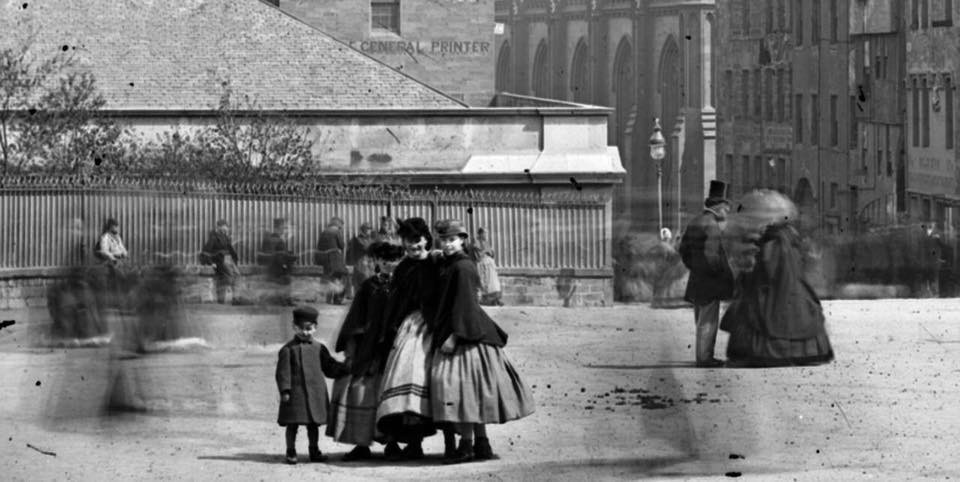
been the townhouse of the old Laird of Cockpen. She then installed a camera obscura on top of it and exhibitions calling it Short’s Observatory (see image left) and Museum of Science and Art. |

PATRICK GEDDES
In 1892, Patrick Geddes, a famous town planner and sociologist, bought the Tower in a public auction. He re-named it the Outlook Tower because he wanted to change people’s outlook. Geddes used the camera obscura to change the way people looked at life and the interaction between town and country.
Although best known as the founder of modern town planning, Geddes’ background was in biology and sociology. Geddes lived in the New Town, like most reasonably affluent people at the time, however he wanted to improve slum conditions in the Old Town, and so he moved to James Court near to the Camera Obscura and improved its appearance, whitewashing the dull walls and introducing plants. He created the first University ‘halls of residence’ at Milne’s Court, setting it up as an idealistic, self managing community with the mission not just to live there, but to influence those around.
Geddes and the Outlook Tower
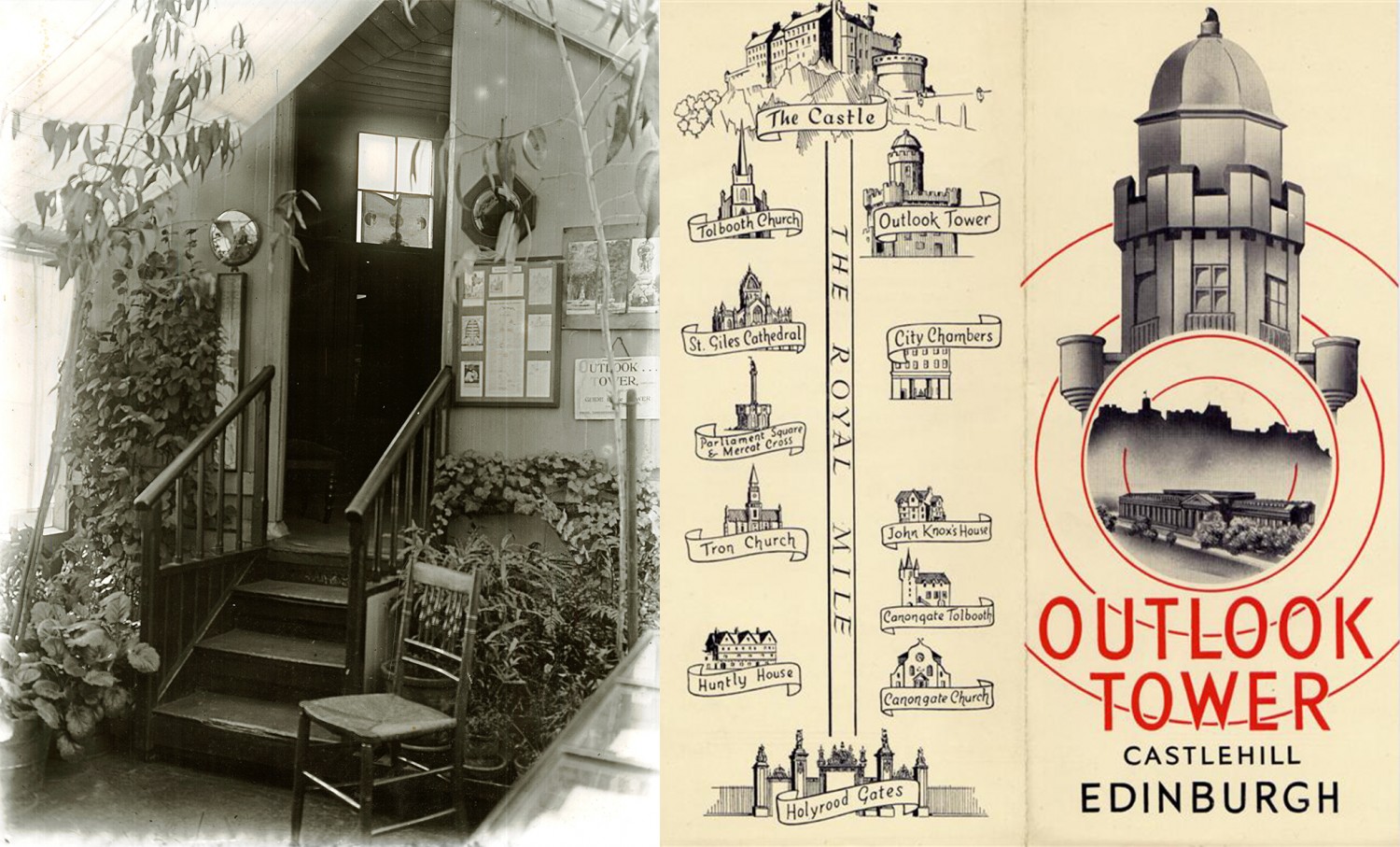
In 1892, Geddes bought the Tower in a public auction, naming it the ‘Outlook Tower’ because he wanted to change people’s outlook. When taking tours, Geddes would first rush people up the original turnpike stair (currently our escape stair), all the way to the top. After the quick climb, with blood rushing to their heads, visitors were shown the Camera Obscura. Geddes used the Camera to show them ‘life’ as a whole and the relationship between the town and the countryside all around the town.
In the foyer outside the Camera were different coloured stained glass windows with subjects such as ‘botany’, ’zoology’ etc. Geddes wanted to stop people seeing life only through their own interest, or one colour window, but to grasp the wholeness and interdependency of life. The Camera showed the reality - all colours together. After seeing the Camera Obscura, visitors sat in a darkened meditation room - the inlook room - to internalise what they had learned, making it their own. Then visitors went down through the Tower - through the ‘Edinburgh Room’, then down through exhibitions about Scotland, Language, Europe and finally the World.
Later Geddes went to India, the Tower lost its ‘enchanter’, and the place became less of a hive of intellectual debate. However Geddes’ ideas live on and are still popular today, all around the world. |